Why is the Amalfi Coast so popular? The story behind Italy's most famous coast

Some places become famous because they are beautiful. Other places become famous because they tell exactly the story that travelers want to believe. The Italian coast south of Naples does both.
The appeal lies not only in the pastel-colored houses, the lemon trees, or the sea view. Those images certainly help. But the real reason why this coastline is so beloved lies deeper. It is a combination of dramatic landscape, centuries-old villages, scarcity, myth-making, and an almost cinematic idea of the good life.
As a result, the Amalfi Coast has become more than a destination. It has become a symbol.

The coast is spectacular in a way that feels rare.
The first explanation is simple: the landscape is exceptional.
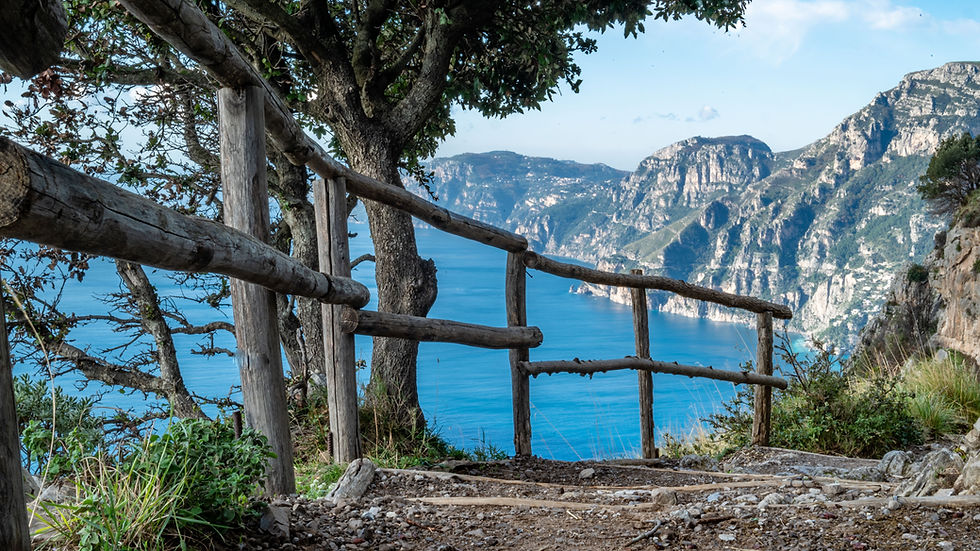
Along this coast, mountains drop almost directly into the sea. Villages seem plastered against the rocks. Roads wind along cliffs, sometimes so narrow that every bend feels like a small event. This gives the area a dramatic, yet intimate, quality. The distance between sea, village, and mountain is small. Everything lies close together.
Many coastal destinations have beaches. This region has height, depth, and tension . The view changes constantly. From a terrace, you see boats moving below like dots. From the water, you see houses climbing upwards in a stepped fashion. That layering makes the place photogenic, but above all, memorable.
It is also a landscape that is not easy to copy. You cannot build a new version on an empty stretch of coast. The appeal comes precisely from the limitations: the steep cliffs, the old paths, the small squares, and the narrow streets.
The villages sell not perfection, but character.
The most famous places on the coast are not large. That is important for their charm. Places like Positano and Amalfi feel familiar, even to those who have never been there, because their forms have been depicted so often: colored facades, stairs, domes, terraces, and viewpoints.
Yet their appeal is not solely about beauty. It is also about character. The villages were built out of necessity, not as scenery. Houses stand where there was space. Stairs replace wide streets. Squares are meeting places simply because there is little flat ground.
This gives visitors the feeling that they are stepping into a real place, even though tourism is now strongly present there. Behind the familiar sights, an older logic still lurks: fishing boats, churches, markets, family hotels, lemon gardens, and small workshops.
That mix is powerful. The coast feels well-maintained enough to travel comfortably, but old enough not to seem airbrushed.
History gives the place weight
Popularity grows faster when beauty has a story. This coast has that story.
Amalfi was an important maritime republic in the Middle Ages. The city had trade contacts by sea and played a role in the Mediterranean world. That history is still palpable in the architecture, especially around the cathedral and the old center.
Later, the region became part of the imagination of European travelers. Artists, writers, and wealthy visitors flocked to Southern Italy in search of light, ruins, the sea, and a different way of life. The coast fit that desire perfectly. It offered no grand monumental city like Rome, but something else: a place where landscape and daily life coincided.
In 1997, the area was added to the UNESCO World Heritage List. That kind of recognition does not automatically make a destination popular, but it does confirm what travelers already sense: this is no ordinary stretch of coastline.
The route there is part of the experience.
Part of the popularity comes from the way you experience the coast. It is not a destination where you just arrive. You travel through it.
The famous coastal road, with its curves along cliffs and sea views, makes the journey itself a memory. For some, that is romantic. For others, it is nerve-wracking, especially during peak season, when buses, scooters, and cars share the same narrow space.
The boat also plays a major role. Only from the sea do you truly see how improbably the villages are situated. The coast then becomes less of a map and more of a scene. Each village appears like an amphitheater by the water.
It is precisely those routes that make the journey slow. And slow travel fits well with the image of Italy that many people seek: not just looking, but lingering. A coffee in a square. A lunch with a view. A walk to a church situated on a hill. A boat that departs later than planned.
Social media have accelerated the desire
No analysis of current popularity is complete without Instagram, TikTok, and travel blogs. The coast is made for visual culture, without being made for it.
Pastel-colored houses against a blue sea work instantly on a screen. Lemons, ceramics, linen clothing, steep stairs, and sunsets form a recognizable visual language. One photo can summarize the entire idea of a vacation.
Yet social media does not explain everything. Many places are photogenic and then fade from view. This coast lingers because the image corresponds to a broader dream: a slower, more beautiful, more sensory life . Food tastes better there in the imagination. Light seems softer. Time seems less strict.
Social media did not invent that desire. They only spread it faster.

Scarcity makes the coast even more desirable
The popularity also has a practical side: there is little space.
The villages are small. Roads are narrow. Hotels cannot expand endlessly. Parking spaces are limited. Beaches are often compact. As a result, a stay quickly feels exclusive, even when the coast is busy.
Scarcity increases attraction. If something is harder to attain, it gains more value in the imagination. A table with a view, a room with a balcony, or a quiet boat trip feels special precisely because it is not a given.
There is also a downside. During peak season, the crowds can significantly spoil the romantic picture. The same narrow street that feels charming out of season can become stifling in July or August. Those expecting only the perfect picture may be surprised by traffic jams, queues, and high prices.
Yet that does little to detract from the reputation. Sometimes crowds even reinforce the myth. A place everyone wants to go seems even more worthwhile.
The kitchen completes the picture.
A destination only becomes truly loved when it also lives up to the story it tells. This coast has that advantage.
Lemons are more than just decoration here. They appear in limoncello, pastries, sauces, and ceramic motifs. Seafood, pasta, mozzarella, tomatoes, and local wines fit the idea of simple food in a beautiful location. The cuisine doesn't need to be complicated. It works because it aligns with the landscape.
For many travelers, food is a way to feel part of the place for a moment. A plate of pasta with a view of the sea is not a unique experience in a culinary sense, but it is in an emotional sense. It confirms exactly why people came.
That makes the coast not only beautiful to look at, but also easy to remember. Scent, taste, and light often linger longer than a purchased souvenir.
The coast fits the Italian ideal perfectly.
Many countries have beautiful coastlines. Italy, in addition, has a strong cultural image. Art, food, fashion, film, family, squares, espresso, churches, scooters, and old stones together evoke a recognizable feeling.
This region brings together many of those elements in a small area. That is what makes it so powerful. A visit feels as if different Italian dreams are available at the same time: the historic village, the sea, the good food, the terrace, the boat trip, the morning walk, and the sunset.
That is why the coast is not only popular with people looking for a beach. It also attracts travelers seeking atmosphere. People who want a place that lets itself be seen, tasted, and told.
Popularity changes the place, but does not extinguish its power
The big question is whether the coast can still live up to its reputation. The honest answer: not always, not for everyone, and certainly not at every time of year.
Anyone arriving in the middle of the high season expecting silence will likely be disappointed. Anyone who thinks every view feels spontaneous and undiscovered will quickly realize how well-known this place is. Fame comes at a price.
But anyone who approaches the coast with realistic expectations will see why it has been attracting people for so long. Set off early. Choose smaller villages as well. Travel by boat or on foot. Stay longer than one day if possible. That creates space between the moments when the crowds dominate.
The attraction does not lie in one perfect photo. It lies in the succession of impressions: a church bell in the morning, the scent of lemon leaves, a bend in the road, a boat on dark blue water, a staircase that just keeps rising.
The coast became popular because it is beautiful. It remained popular because it evokes a feeling that many travelers keep seeking: to live for a moment as if the world were smaller, sunnier, and simpler!

Comments